Luxe9
The Rudy Ceramic Compote
The Rudy Ceramic Compote
Couldn't load pickup availability
The Story
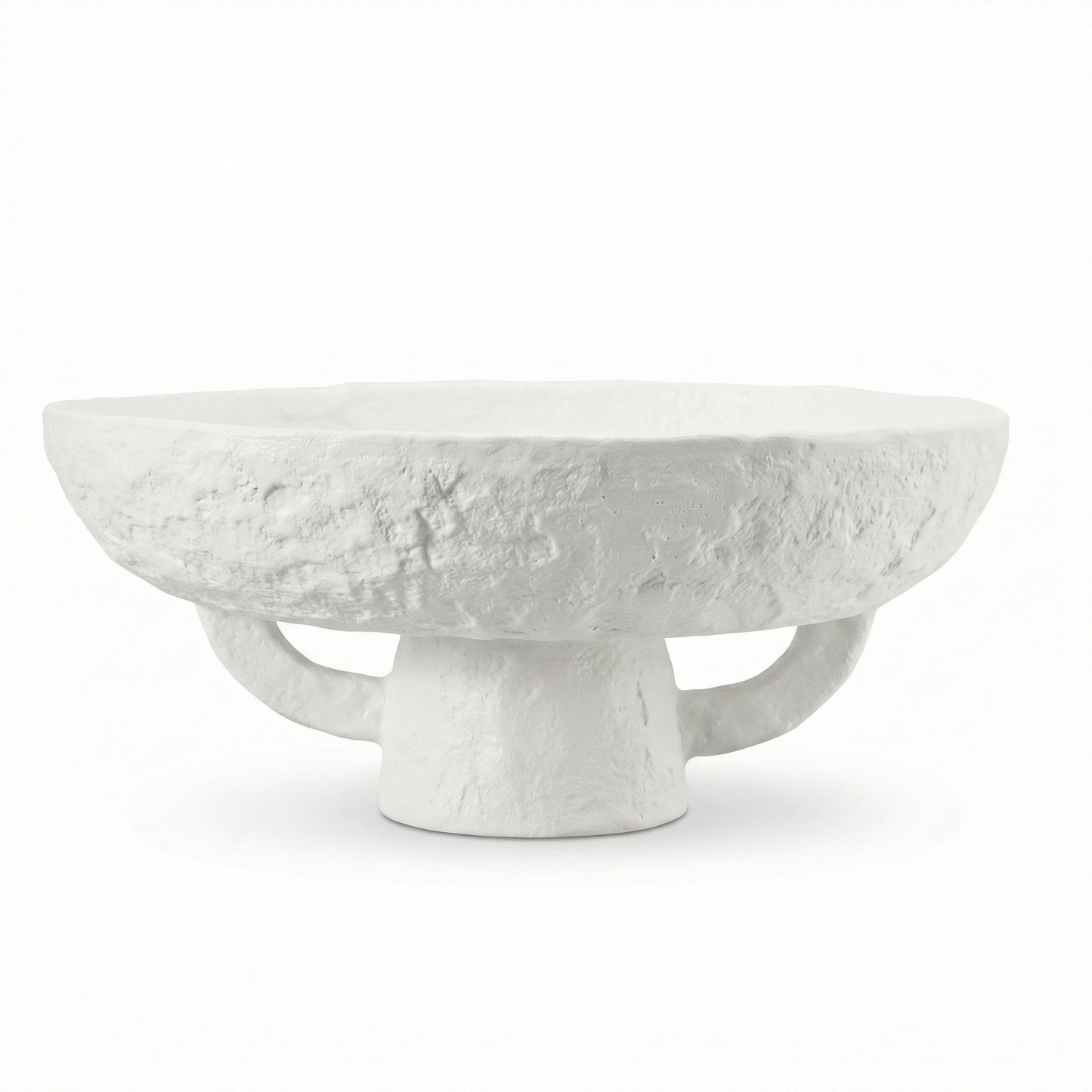
The Rudy Compote is less of a vessel and more of a study in subtractive sculpture. Resembling an artifact hewn from a single block of chalk or alabaster, its surface carries the deliberate, rhythmic marks of the chisel—a testament to the hand that shaped it. The wide, open bowl rests upon a sturdy pedestal base, flanked by two architectural handles that add a surprising, modernist geometry to its otherwise organic silhouette.
There is a quiet, meditative quality to this piece. It does not clamor for attention with gloss or shine; instead, it absorbs light, allowing shadows to play across its textured ridges. It embodies the essence of Wabi-Sabi—finding perfection in the raw, the tactile, and the unpolished. As a centerpiece, it anchors a room with a sense of ancient permanence, feeling at once historical and undeniably contemporary.
Why It Belongs in Your Home
Tactile Serenity In a modern home often dominated by sleek glass and smooth metal, the Rudy introduces necessary friction. Its chiseled, matte surface catches the light in complex ways, adding deep visual interest and a softness that invites touch. It is texture as a form of luxury.
Architectural Balance The interplay between the deep bowl and the stout, handle-adorned base creates a silhouette that is balanced and grounded. It provides distinct visual weight to a coffee table or dining console without feeling heavy, thanks to its pristine white palette.
Curated Imperfection This piece champions the "undone" aesthetic of Japandi design. It suggests a home that is collected, not just decorated. The raw finish makes it feel like a gallery object, elevating the space around it simply by existing.
The Details
Material: Ceramic with a raw, matte finish.
Craftsmanship: Hand-finished chiseled texture; sculptural handles.
Colour: Chalk White.
Dimensions: .
Care: Dust with a soft, dry cloth.
Styling Note from Sage
"Because the Rudy is not waterproof, treat it as a stage for dry, textural elements. I love filling this wide bowl with oversized dried moss balls (Kokedama) or a collection of bleached driftwood. Alternatively, leave it completely empty on a dark wood console table—let the shadow play of the chiseled interior be the art itself."